
How Recovery Engineers Repair Damaged Storage
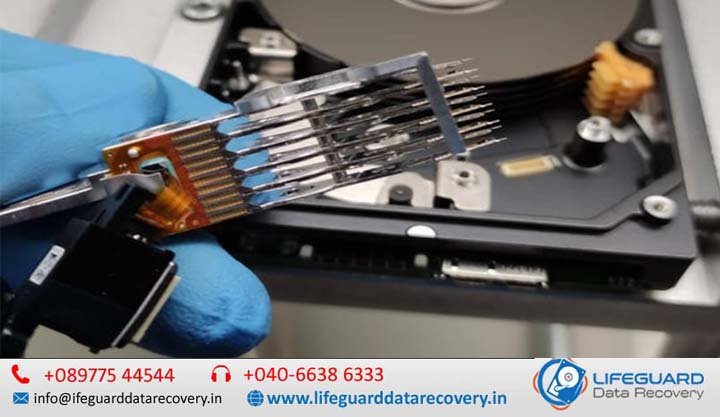
How Recovery Engineers Repair Damaged Storage.When a storage drive stops responding, the immediate human reaction is panic. The spreadsheet containing years of financial bookkeeping, an unbacked-up photo library, or critical enterprise databases vanish into a black screen. While consumer software tools promise quick fixes, severe storage device hardware failures require an entirely different level of intervention. This deep dive pulls back the curtain on data recovery engineering techniques. You will learn the exact micro-surgery, electrical bypassing, and forensic software engineering that professional labs use to extract data from seemingly destroyed media. Physical vs. Logical Failure: The First Diagnostic Crossroads Before an engineer turns on a single soldering iron or opens a drive casing, they must determine the exact nature of the failure. Treating a physical hardware breakdown with logical software tools can permanently destroy data. Logical Damage: Software, Corruption, and File Systems Logical failure means the drive’s physical components work perfectly, but the data structures are compromised. This involves scrambled file systems (like NTFS, APFS, or ext4), accidental partition formatting, malware encryption, or partial file overwrites. In these scenarios, the drive reads and writes normally, but the operating system cannot locate the index markers required to piece files together. Physical Damage: Mechanical Breakdown and Circuit Failures Physical damage occurs when the hardware itself fails. This is a destructive state where physical components inside the drive break, warp, or burn out. Examples include a dropped external drive with broken internal components, a solid-state drive with a blown voltage regulator, or media degraded by water or fire. Hard drive diagnostics and repair protocols dictate that a physically compromised device must never be powered on standard computer hardware, as doing so can cause permanent data obliteration. The Data Recovery Laboratory Process: Diagnostics Under the Microscope A reputable data recovery laboratory process follows strict forensic protocols to prevent secondary damage during evaluation. Inside the Cleanroom: Why ISO Certified Environments Matter When mechanical storage devices need to be opened, engineers work within a certified data recovery clean room. These environments are strictly rated under ISO 14644-1 standards. Industry leaders operate ISO Class 5 Cleanrooms, which allow fewer than 3,520 microscopic particles (0.5 micrometers or larger) per cubic meter of air. Can damaged storage devices be repaired safely outside these environments? Absolutely not. A standard room contains millions of floating dust, skin, and fabric particles. If a single dust particle settles on a magnetic hard drive platter, the flying read/write head (which hovers a mere 5 nanometers above the surface) will hit it. This creates a head crash, scraping the magnetic coating off the platter and destroying the data forever. The Mechanical Storage Device Repair Process (HDD) Mechanical hard disk drives (HDDs) are marvels of high-speed micro-mechanics. When they suffer physical failure, recovery engineers perform microscopic repairs to temporarily stabilize the drive. Replacing Damaged Read/Write Head Assemblies The read/write heads are the tiny electromagnets responsible for reading data off the spinning platters. If a drive is dropped or suffers a power surge, these heads can bend, snap, or “clamp” onto the platter surface (stiction). To fix this, engineers source an identical “donor drive”-matching not just the model, but the specific manufacture date, factory site, and pre-amp chip revision. Using specialized precision tools called head replacement combs, the engineer slides the damaged head stack out and installs the donor assembly without allowing the fragile heads to touch one another or scratch the platters. Platter Transplants and Motor Failures Inside the HDD, a precision spindle motor spins the platters at speeds up to 15,000 RPM. If the bearings seize or the motor burns out, the platters cannot turn. Engineers resolve this by executing a platter transplant. Using a mechanical alignment jig, they extract the stack of magnetic discs simultaneously, maintaining their exact microscopic alignment relative to one another, and transfer them into a healthy donor drive chassis. How Recovery Engineers Repair Hard Drive Electronics A common point of failure is the Printed Circuit Board (PCB) bolted to the bottom of the drive. While old hard drives allowed you to simply swap a broken PCB with a working one, modern storage media recovery services face a much tougher hurdle. Every modern drive feature unique adaptive calibration data stored on an EEPROM chip (or integrated into the main MCU) on the PCB. This chip contains precise alignment values unique to that single drive’s physical tolerances. How PCB repair helps recover lost data involves desoldering this adaptive chip from the damaged board and micro-soldering it onto a compatible donor PCB. Without this specific chip transfer, a donor board will cause the drive to click and fail to initialize. The Modern SSD Data Recovery Process Solid-state drives (SSDs) contain no moving parts, meaning they do not require a cleanroom environment. However, the SSD data recovery process presents a highly complex electrical and mathematical challenge. Bypassing Controller Failure via Chip-Off Techniques The most common hardware vulnerability in an SSD is a failed Silicon Motion, Phison, or proprietary controller chip, or a shorted Power Management Integrated Circuit (PMIC). When the controller dies, the drive turns into a “brick” and cannot communicate with a computer. To bypass this, engineers utilize an invasive data recovery engineering technique known as Chip-Off recovery. Engineers place the SSD on a professional infrared rework station, carefully heating the board to de-solder the individual NAND flash memory chips. Reconstructing Controller Algorithms and Wear Leveling Reading the raw chips is only the first step. The data inside NAND flash chips is completely scrambled. To extend the life of an SSD, the controller uses a Flash Translation Layer (FTL) to constantly scatter data blocks across different chips, alongside complex Error Correction Code (ECC) calculations and XOR encryption algorithms. Because there is no hardware controller to piece these blocks together, the recovery engineer must use specialized data recovery engineering tools (like the PC-3000 SSD framework) to reverse-engineer the original controller’s proprietary wear-leveling algorithms. They build a virtual controller in software to map the scattered blocks back into a readable, unfragmented disk image. Advanced