
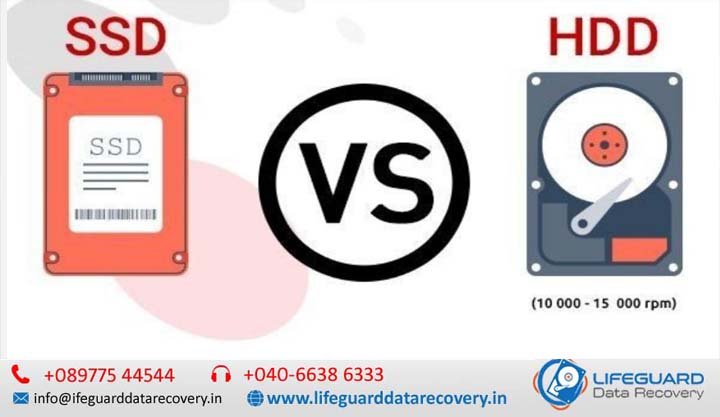
Every storage drive eventually fails, but which is more reliable: HDD or SSD? When choosing hardware for boot drives, home servers, or cold storage backups, understanding drive reliability is critical to preventing sudden data loss.
For years, mechanical Hard Disk Drives (HDDs) dominated secondary storage, while Solid-State Drives (SSDs) were reserved for high-speed boot volumes. Today, SSD capacities have grown, and prices have dropped, making SSD vs HDD reliability a primary consideration for IT managers and everyday users alike. Data center telemetries reveal clear differences in failure rates, longevity, and data retention between these two technologies.
HDD vs SSD Reliability Overview: How Their Architectures Differ
To evaluate HDD vs SSD reliability, you must first examine how each drive stores and retrieves binary data. Physical architecture dictates vulnerability.
Mechanical Hard Drives (HDD): Spinning Platters and Moving Parts
Hard Disk Drives store data magnetically on rapidly spinning glass or aluminum platters (typically rotating at 5,400 to 7,200 RPM). A mechanical actuator arm holds a tiny read/write head hovering just nanometers above the spinning platter surface.
Because HDDs rely on high-precision mechanical motion, they are inherently susceptible to physical wear over time, thermal expansion, motor failure, and catastrophic damage caused by physical bumps or drops while active.
Solid State Drives (SSD): NAND Flash and Electronic Controllers
Solid State Drives contain zero moving parts. Instead, they write data electronically into floating-gate or charge-trap memory cells across microchips known as NAND flash memory.
An integrated microchip called the SSD Controller manages data placement, wear leveling, garbage collection, and error correction (ECC). By eliminating mechanical motors and read/write heads, SSDs eliminate the primary source of physical hardware failure seen in traditional hard drives.
HDD vs SSD Failure Rate and Lifespan: What the Data Shows
Real-world statistics from enterprise data center deployments reveal distinct operational failure curves for both drive types.
Annualized Failure Rates (AFR): SSD vs HDD Reliability Over Time
Multi-year drive telemetry collected by cloud storage providers like Back blaze demonstrates that SSDs maintain lower and flatter failure rates than HDDs throughout their operational lifespans.
-
HDD Failure Trends: Mechanical hard drives generally follow a traditional “bathtub curve.” Failure rates peak slightly in Year 1 due to manufacturing defects (infant mortality), stabilize during Years 2-3, and spike sharply after Year 4 as mechanical bearings, motors, and platter coatings wear down. Cumulative HDD Annualized Failure Rates (AFR) often exceed 5% to 6% per year once drives pass the 5-year mark.
-
SSD Failure Trends: SSD failure rates remain consistently lower averaging between 0.8% and 1.2% AFR across early and mid-life cycles. Because SSDs do not suffer from mechanical friction, their failure curve remains flat for many years until the NAND flash memory reaches its write endurance limit.
Drive Longevity: How Long Do HDDs and SSDs Last?
When evaluating how long HDDs and SSDs last in daily computing environments:
| Metric | Hard Disk Drives (HDD) | Solid State Drives (SSD) |
| Typical Lifespan | 3 to 5 Years | 5 to 10+ Years (light/moderate use) |
| Primary End-of-Life Cause | Mechanical wear, motor failure, head crash | NAND cell endurance depletion (write wear out) |
| Shock Tolerance | Poor (vulnerable to drops/vibration) | Excellent (high resistance to impact) |
| Average Failure Rate (Mid-Life) | 1.3% – 2.5% AFR | 0.8% – 1.0% AFR |
Flash Endurance Metrics: Understanding TBW and DWPD
Unlike HDDs-where read and write cycles do not directly degrade the magnetic media-SSDs wear out slightly every time data is written.
-
TBW (Terabytes Written): The total amount of cumulative data that can be written to an SSD before the memory cells degrade beyond specification. A standard consumer 1TB NVMe SSD typically offers a 600 TBW rating.
-
DWPD (Drive Writes Per Day): The number of times the drive’s total capacity can be overwritten every day for its warranty period (usually 3 to 5 years).
For consumer workloads (browsing, gaming, office tasks), typical users write 10-30 GB per day. At this rate, a 600 TBW SSD would take over 50 years to consume its write endurance, meaning controller failure or electrical issues are far more likely to occur before write-exhaustion happens.
HDD vs SSD Durability and Failure Causes
Understanding what causes HDD failure versus what causes SSD failure helps identify operational environments best suited for each drive type.
Primary Causes of HDD Failure: Wear, Drops, and Heat
-
Physical Impact & Shock: Dropping a running laptop or bumping an external desktop drive can cause the head to strike the spinning platter (a head crash), causing instant data loss.
-
Mechanical Bearing Wear: Over time, spindle motor bearings degrade, resulting in vibration, increased operating temperatures, and eventual motor seizure.
-
Bad Magnetic Sectors: Platter surfaces gradually lose magnetic flux density over time, creating unreadable bad sectors.
Primary Causes of SSD Failure: NAND Wear, Voltage Spikes, and Thermal Throttling
-
Controller Circuit Failure: The SSD controller is a complex processor. If the controller chip fails, the drive becomes unreadable instantly, even if the NAND flash memory chips remain intact.
-
Power Outages & Voltage Flashes: Unexpected loss of power during active flash write cycles can corrupt partition tables or damage drive firmware.
-
Thermal Degradation: High operating temperatures accelerate electron leakage in NAND cells and place extreme stress on power delivery capacitors.
HDD vs SSD Failure Symptoms: How to Spot an Impending Drive Crash
Recognizing the early warning signs of drive failure provides a window to rescue critical data before total loss occurs.
HDD Warning Signs: Clicking, Slow Seek Times, and S.M.A.R.T. Errors
-
The “Click of Death”: Repeating clicking or grinding noises indicate the actuator arm is repeatedly attempting to calibrate over damaged platter sectors.
-
Extreme Slowdowns: Abruptly long file access times, freezing file transfers, or spinning drive indicators.
-
S.M.A.R.T. Warnings: Operating system alerts indicating reallocated sector counts or uncorrectable sector errors.
SSD Warning Signs: Read-Only Mode, File System Crashes, and Bad Blocks
-
Sudden Read-Only Mode: Many modern SSD controllers lock the drive into a read-only state when NAND wear reaches 100% or bad blocks accumulate, allowing you to back up files but preventing new writes.
-
System Crashes During Boot: Blue Screen of Death (BSOD) errors occurring when the OS attempts to read system files located on corrupt flash blocks.
-
Disappearing Drive: The drive suddenly stops appearing in Windows File Explorer or motherboard BIOS after a system restart.
HDD vs SSD Data Safety and Long-Term Storage
A critical, overlooked aspect of HDD vs SSD data safety is how each media type behaves when powered off in cold storage.
Can an SSD Lose Data Over Time Without Power?
Yes, SSDs can lose data over time if left disconnected from power.
SSDs store data as electrical charges trapped inside microscopic floating-gate transistors. According to industry standard specifications (such as JEDEC JESD218), consumer SSDs are designed to guarantee data retention for a minimum of 1 year at 30°C (86°F) without power after reaching end-of-life write endurance.
-
In real-world conditions, an unpowered consumer SSD stored in a warm closet (35°C–40°C) can suffer electrical charge leakage (“bit rot”) in as little as 6 to 18 months, resulting in corrupted files.
-
Conversely, HDDs retain magnetic orientation for 10 to 15+ years without power, making mechanical hard drives significantly safer for offline cold archiving in safe deposit boxes or storage closets.
HDD vs SSD Performance and Reliability Balance
Speed directly impacts drive exposure to stress. An NV Me SSD transfers files up to 35 times faster than a standard SATA hard drive. Reduced access times mean SSDs complete active read/write jobs faster and spend more time in low-power idle states, minimizing overall heat generation and power consumption.
HDD vs SSD Data Recovery Comparison
When hardware fails, how feasible is file recovery?
Recovering Data From Failed HDDs vs Failed SSDs
-
HDD Data Recovery: Because mechanical drives record data as physical magnetic charges across platters, cleanroom specialists can physically open the drive, swap actuator arms, or transfer platters to donor boards. Data recovery success rates for mechanically damaged HDDs are relatively high (often 80-90%).
-
SSD Data Recovery: Recovering files from a dead SSD is far more complex. Active TRIM commands instruct the controller to permanently erase flash memory blocks as soon as files are deleted. Furthermore, hardware encryption on modern controllers renders raw NAND chip reads unreadable if the controller chip burns out.
HDD vs SSD Backup Reliability and Best Use Cases
Choosing the best drive for reliable data storage depends on how the drive will be used.
How to Prevent Storage Drive Failure and Protect Your Data
Proactive drive maintenance combined with automated backup protocols is the only guaranteed protection against hardware failure.
Health Monitoring: How to Check S.M.A.R.T. Attributes and SSD Wear Levels
Regularly monitor drive diagnostics using tools such as Crystal Disk Info or manufacturer-specific utilities (Samsung Magician, Western Digital Dashboard). Pay close attention to:
-
HDD: Reallocated Sectors Count, Current Pending Sector Count.
-
SSD: Percentage Life Used, Wear Leveling Count, Media and Data Integrity Errors.
Implementing the 3-2-1 Backup Rule Across HDDs and SSDs
Never rely on a single drive-regardless of whether it is an SSD or HDD. Deploy a 3-2-1 Backup Strategy:
-
3 Copies of Data: Primary working copy + two backups.
-
2 Different Media Types: Active fast NVMe SSD + secondary high-capacity local HDD storage.
-
1 Offsite Backup: Automated encrypted offsite cloud backup solution.
Frequently Asked Questions (FAQs)
Which is more reliable: HDD or SSD?
SSDs are generally more reliable than HDDs for daily active computing. Because SSDs have no moving parts, they suffer fewer physical failures and maintain a lower Annualized Failure Rate (~0.9% AFR) compared to HDDs (~1.4% to 5%+ AFR as drives age). However, HDDs are more reliable for long-term offline cold storage without power.
Do SSDs fail suddenly without warning?
Yes, SSDs are more prone to sudden, catastrophic failures than HDDs. While HDDs often give audible warnings (clicking, slow seek times) as mechanical parts wear down, an SSD failure often involves a burnt-out controller or power regulator that causes the drive to vanish instantly without prior warning.
Should I use an HDD or SSD for external backups?
Use a portable SSD if you frequently travel with your backup drive, as SSDs easily withstand shocks, drops, and bumps. Use a desktop HDD if you need a high-capacity (4TB+) stationary backup drive that stays plugged into your home/office desk or stored long-term in a safe.