
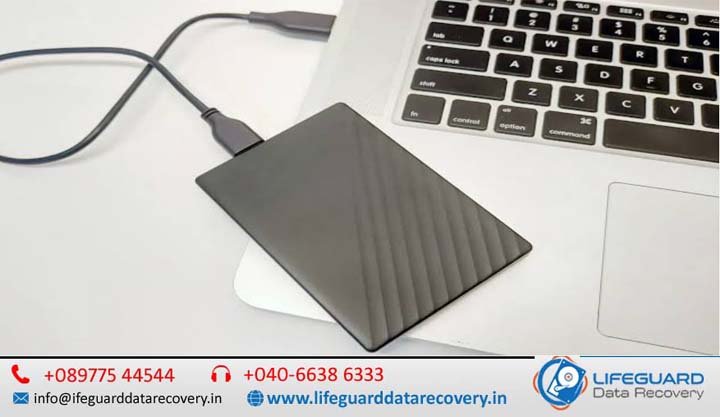
What causes external hard drives to disconnect?
We’ve all been there: you’re in the middle of a massive file transfer or working directly off your storage drive when suddenly, you hear that dreaded system notification sound. A window pops up warning you that the device was not ejected properly, and your progress vanishes. When your external hard drive is disconnecting randomly, it’s more than just an annoyance-it places your valuable files, photos, and system backups at risk of permanent corruption. Fortunately, this is a highly fixable issue. In this comprehensive guide, we will break down what causes external hard drives to disconnect, teach you how to isolate hardware vs. software bugs and provide step-by-step solutions for both Windows and macOS. The Root Causes: Why Does My External Hard Drive Disconnect? Understanding why your external hard drive disconnects is the first step toward a permanent fix. These interruptions usually stem from one of five primary physical or logical issues: 1. Unstable or Insufficient Power Supply (Bus Power vs. Wall Power) Many portable hard drive connection issues stem from basic physics. Portable 2.5″ mechanical drives and external SSDs are “bus-powered,” meaning they draw electricity directly from your computer’s USB port. A standard USB 2.0 port maxes out at 500mA, while USB 3.0 provides up to 900mA. If your computer’s port fails to sustain this current, or if you are running several power-hungry peripherals at once, the drive controller will suddenly reset, triggering a disconnection. 2. Faulty, Loose, or Degraded USB Cables & Ports A faulty USB cable can absolutely cause an external hard drive to disconnect. USB cables undergo constant bending and pulling, which creates micro-fractures in the delicate internal copper wiring. The cable might still carry enough power to illuminate the drive’s LED status light, but it will fail under the heavy data load required during read/write cycles. Similarly, physical dust accumulation or loose connector solder joints inside the laptop port itself can break connections upon the slightest physical movement. 3. Aggressive OS Power Management Settings Both Windows and macOS contain built-in energy-conservation protocols. While well-intentioned, power-saving features can mistakenly identify your connected external storage device as “inactive”. The operating system cuts or drops voltage to the USB port to save battery, forcing a hard disconnect while files are still technically open. 4. USB Controller and Driver Conflicts If your external HDD is disconnecting on Windows or Mac, the software driver acting as the translator between your motherboard and the drive may be corrupted, outdated, or glitched. System updates can sometimes break these handshakes, causing the USB host controller to randomly drop active connections. 5. Hard Drive Thermal Throttling & Internal Sector Damage Can overheating cause an external hard drive to disconnect? Yes. Modern high-speed NV Me external SSDs generate a massive amount of heat under continuous use. To prevent physical silicon degradation, the built-in controller chip will trigger a hard thermal shutdown if temperatures spike past safe operating limits. On older mechanical HDDs, physical wear, bad sectors, or failing internal write-heads can cause the drive’s firmware to crash and drop offline. Why Does My External Hard Drive Disconnect During File Transfer? One of the most common complaints is a USB external drive that keeps disconnecting specifically during active file transfers. This occurs due to two main technical reasons: Power Draw Spikes: When an external mechanical hard drive is idling, its power consumption is low. However, when you start transferring a large folder, the drive’s internal platters must spin up to maximum RPM, and the write heads must move rapidly. This sudden spike in activity demands maximum electrical current. If your USB port or cable cannot support this peak draw, the connection collapses instantly. Write-Cache Exhaustion: Cheap external hard drive bridge chips can suffer from buffer overflows when continuous streams of data saturate the controller. When the controller hangs, the operating system times out the connection, believing the device has been unplugged. Rule Out Hardware Issues (Quick Diagnostics) Before tweaking complex operating system settings, always perform these basic hardware triage steps first: 1. Swap the Cable and the Port Do not assume your current cable is fine because it worked yesterday. Swap it out for a high-quality, double-shielded, USB-IF certified cable. Additionally, move the connection to a different port on your machine. On desktop computers, always use the rear ports directly on the motherboard rather than the front-panel ports, as the rear ports provide more stable current. 2. Bypass Unpowered USB Hubs Unpowered, passive USB hubs split a single port’s limited $500\text{mA}$ or $900\text{mA}$ power supply across multiple connected devices. If you must use a hub, always use a powered USB hub that plugs directly into a wall outlet to guarantee dedicated power to your drive. 3. Test on Another Computer Connect the drive to a completely different computer (ideally running a different operating system). If the drive still disconnects, the problem lies within the drive’s cable, power supply, or internal hardware. If the drive stays connected and works perfectly, the issue is a software setting, power configuration, or driver conflict on your primary computer. How to Fix External Hard Drive Disconnecting on Windows If you have confirmed your hardware is healthy, follow these targeted steps to resolve software-based connection drops on Windows 10 or Windows 11. 1. Disable USB Selective Suspend in Power Options “USB Selective Suspend” is a feature designed to save battery by putting individual USB ports into a low-power state when Windows thinks they are idle. Disabling this is the single most effective fix for Windows users. 1.Open Control Panel: Step 1. Press the Windows Key + R, type control, and hit Enter. Set the “View by” option in the top right to Large Icons. 2.Navigate to Power Settings: Step 2. Click on Power Options. Next to your active power plan, click Change plan settings. 3.Access Advanced Power Settings: Step 3. Click on Change advanced power settings. A new window will pop up. 4.Disable USB Selective Suspend: Step 4. Scroll down and expand USB settings, then expand USB selective suspend setting. Change the settings for both On