
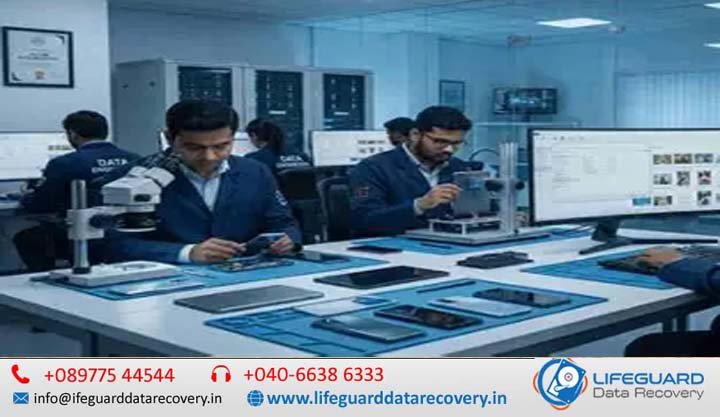
Data recovery for critical business files India
India’s enterprise data landscape is expanding at an unprecedented rate. As Indian businesses digitize operations across cloud, on-premises data centers, and hybrid infrastructures, storage deployment volumes have surged beyond tens of exabytes annually. However, this rapid scale brings heightened exposure to data loss caused by hardware wear, software corruption, ransomware, or human error. When primary storage volumes collapse, standard consumer-grade recovery tools are insufficient. Recovering data recovery for critical business files India requires an understanding of complex file systems, enterprise encryption, hardware diagnostics, and strict statutory compliance under Indian law. This non-promotional guide provides IT directors, system administrators, and chief technology officers (CTOs) with an enterprise framework for managing storage emergencies, navigating recovery workflows, and maintaining compliance. 1. Introduction: The High Stakes of Corporate Data Loss in India Data is a primary driver of enterprise valuation, operational capability, and regulatory compliance. In high-density commercial hubs across India-from Bengaluru and the Mumbai Metropolitan Region to the National Capital Region (NCR) and Hyderabad-a single storage outage can disrupt core business functions. The Financial, Legal, and Operational Impact on Business Continuity When organizations lose access to enterprise databases, proprietary source code, financial ledgers, or customer files, the costs extend far beyond immediate IT repair: Direct Operational Loss: Idle employees, halted production lines, and an inability to fulfill customer transactions. Reputational Damage: Loss of client trust missed SLAs, and public fallout from service outages. Regulatory Penalties: The legal liability of mishandling protected customer data during a crash or an unverified recovery attempt. Organizations that lack a structured incident response plan risk turning a temporary hardware glitch into permanent data destruction. What IT Leaders and Managers Will Learn in This Guide This strategy guide provides an end-to-end operational roadmap. You will learn how to recover critical business files in India while preserving data integrity, evaluating recovery methods objectively, managing legal compliance during drive handoffs, and establishing storage resilience against future failures. 2. Understanding Corporate Data Recovery India: Scope and Storage Architectures To execute corporate data recovery India successfully, IT teams must recognize that enterprise storage differs fundamentally from personal desktop storage. Enterprise vs. Consumer Recovery: High Volumes, Complex File Systems, and Encryption Consumer recovery usually involves retrieving unencrypted media files or documents from a single drive partition. Conversely, data recovery solutions for enterprises must navigate multi-layered complexity: Volume and Scale: Storage arrays spanning tens or hundreds of terabytes. Complex File Systems: Advanced file systems like ZFS, ReFS, VMFS, or EXT4 featuring dynamic volume management, deduplication, and parity striping. Block-Level Encryption: Enterprise drives protected by BitLocker, FileVault, or hardware Self-Encrypting Drive (SED) protocols that require credential preservation prior to raw sector extraction. Storage Media Overview: HDDs, Enterprise SSDs, RAID Arrays, and Virtual Servers Modern office data recovery services India encounter diverse hardware platforms: Mechanical Hard Drives (HDDs): High-capacity SAS/SATA enterprise drives utilized in archival storage and high-density NAS units. Solid-State Drives (SSDs & NVMe): High-speed flash storage powering active databases and real-time application servers. Flash storage accounts for over 60% of enterprise storage deployment value in India. RAID & Storage Area Networks (SAN): Redundant drive configurations (RAID 5, 6, 10, 50, 60) designed for fault tolerance. Virtualization Platforms: Hypervisor-managed virtual disk files (.vmdk, .vhdx) running atop hyper-converged hardware. 3. Primary Causes of Critical File Loss in Indian Enterprise Environments Identifying the root cause of storage failure is essential for selecting the appropriate recovery path. Applying software fixes to physical hardware damage frequently results in irreversible data loss. Physical & Hardware Failures: Head Crashes, Motor Seizures, and Thermal Wear Physical failure occurs when the mechanical or electronic components of a drive sustain damage: Head Crashes: Read/write heads flying nanometers above platter surfaces contact the magnetic media, stripping the data layer. Spindle Motor Seizures: High ambient temperatures and continuous duty cycles lead to bearing seizure, stopping platter rotation. NAND Controller & Component Breakdown: Flash memory controllers sustain electrical overstress or thermal degradation, locking the drive into a read-only or completely unreadable state. Logical Corruptions, Accidental Deletion, and System File Corruption Logical failures leave physical hardware intact but render the data structure unreadable: File System Metadata Corruption: Damaged Master File Tables (MFT) or superblock pointers make partitions appear as unformatted RAW space. Accidental Deletion & Partition Loss: Human error during system repartitioning or volume expansion. Database Index Corruption: Abrupt power interruptions leaving SQL, Oracle, or SAP databases in an inconsistent or unmountable state. Cybersecurity Incidents: Ransomware Attacks, Malware, and Unauthorized Overwrites Cyberattacks remain a primary driver of enterprise outages: Ransomware Encryption: Malicious payloads encrypt volume shadow copies and master file pointers. Malicious Overwrites: Advanced threats that overwrite unallocated space or destroy backup catalogs to prevent native system restoration. 4. Early Warnings: Signs and Symptoms of Impending Storage Failure Recognizing storage degradation early allows IT teams to recover files from failed business computers and servers before complete catastrophic failure. Hardware Symptoms: Mechanical Clicking, S.M.A.R.T. Errors, and I/O Bottlenecks Acoustic Anomalies: Rhythmic clicking, ticking, or grinding sounds indicate read/write head assembly miscalibration or contact. S.M.A.R.T. Attribute Alerts: Spikes in Reallocated Sectors Count, Current Pending Sector Count, or Uncorrectable Sector Count. Extreme Latency: Read/write operations that previously took milliseconds stalling for tens of seconds, causing application timeouts. System Symptoms: Missing File Directories, OS Freezes, and Corrupt Database Indices Operating System Errors: Intermittent operating system freezes during disk access, accompanied by Event Viewer ID 7 or ID 11 disk errors. Directory Disappearance: Folders or entire drive partitions vanishing following a reboot. Unmountable Databases: Applications failing to attach primary database files due to header checksum mismatches. 5. Emergency First-Response Protocol: What To Do When Data Loss Strikes When storage failure occurs on enterprise hardware, the immediate actions taken by system administrators dictate whether data can be saved. The IT Admin Triage Checklist: Unmounting Drives and Halting Write Operations Follow this standardized triage protocol immediately upon detecting a failure to support subsequent lost business file recovery: Halt All Write Operations Immediately: Stop all active services, database writes, and background sync processes writing to the affected volume. Unmount the Logical Volume: Unmount the file system