
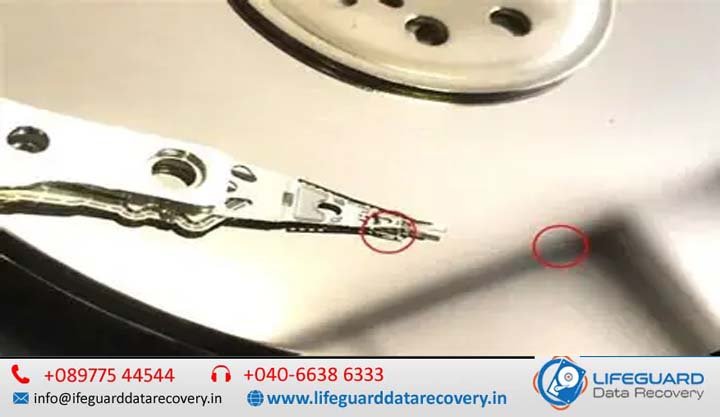
HDD platter damage data recovery India
Hearing an unusual metallic grinding noise from your hard disk drive (HDD) or being told by a local technician that your drive has “scratched platters” is one of the most alarming scenarios in data storage. HDD platters hold your photos, business records, and critical databases. When their physical surface is compromised, the path to recovering your files requires specialized technical expertise. This guide provides a technical overview of HDD platter damage data recovery India, explaining the physics of platter failure, evaluating whether your data can be saved, detailing cleanroom diagnostic workflows, and helping you navigate recovery options across India. 1. Introduction: Can Data Be Saved From a Damaged HDD Platter? When a hard drive suffers physical failure, a common question arises: Can data be recovered after HDD platter damage? The short answer is yes, but with critical caveats. Unlike software-based file deletion-where data remains intact on disk sectors-physical platter damage involves surface degradation. Success depends on the severity and location of the damage, as well as how quickly the drive was powered down after the initial failure. The Anatomy of Physical Hard Drive Failures Inside a hard drive, magnetic platters spin at speeds ranging from 5,400 to 15,000 RPM. Suspended just nanometers above these platters are read/write heads mounted on an actuator arm. Because the flying height of a read/write head is thinner than a single particle of smoke or a human fingerprint, even minor mechanical shocks, electrical surges, or bearing degradation can cause the head to strike the platter. Realistic Recovery Expectations vs. Marketing Myths Many repair shops claim “100% data recovery guarantees” regardless of drive condition. In reality: Physically destroyed magnetic material cannot be read. If a head has gouged into a platter and scraped away the magnetic coating, the data stored on that specific track is gone permanently. Intact sectors remain recoverable. Hard drives contain multiple platter surfaces and tracks. Professional damaged platter data recovery India focuses on isolating damaged zones, replacing broken head stack assemblies, and imaging data from pristine platter sectors. 2. Understanding Hard Drive Platter Damage & Mechanical Mechanics To evaluate recovery options, it helps to understand the engineering behind hard disk surfaces and why traditional “repair” concepts do not apply to platter media. Platters, Magnetic Substrates, and Head Clearance Hard drive platters are constructed from high-rigidity aluminum alloys or glass-ceramic substrates. These substrates are layered with thin magnetic films: Substrate Base: Aluminum or glass core providing structural flatness. Underlayer & Magnetic Coercivity Film: Thin cobalt alloy layers storing binary bits ($0$s and $1$s) as magnetic domains. Protective Carbon Overcoat (Diamond-Like Carbon – DLC): A microscopic layer engineered to withstand minor, non-operational landing contact. Lubricant Layer: A single-molecule liquid lubricant boundary minimizing friction. When a drive operates, aerodynamic lift keeps the read/write slider floating above the lubricant layer. If this cushion fails, the slider cuts through the carbon overcoat and strips away the magnetic layer. Clarifying the Myth: Hard Disk Platter Damage Repair vs. Data Extraction A widespread misconception is that technical labs perform hard disk platter damage repair by buffing out or polishing physical scratches. 3. Primary Causes of HDD Platter Damage Platter degradation stems from acute physical trauma or gradual environmental wear. Head Crashes and Mechanical Shock Sudden movement or dropping an external hard drive while in operation forces the read/write heads to flex and strike the spinning platter. This contact gouges the media surface and bends the head suspension mechanism. Environmental Stressors: Heat, Humidity, and Contamination in Indian Climates Operating conditions across India present specific challenges for mechanical hard drives: High Ambient Moisture & Monsoons: High relative humidity can breach non-helium drive breathers over time, accelerating oxidation on internal electrical contacts and weakening the air-bearing layer. Thermal Expansion: Operating drives in poorly ventilated environments causes uneven expansion of the spindle shaft and actuator pivot, altering sub-micron head clearances. Airborne Particulates: Attempting to open a drive outside a cleanroom exposes platters to fine dust particles, causing immediate head crashes upon startup. Wear and Tear, Motor Bearing Failures, and Manufacturing Deficiencies Fluid Dynamic Bearings (FDB) inside aging hard drives gradually lose lubrication. As the spindle motor wobbles, platters rotate off-axis, forcing read/write heads to drag across the disk surface. 4. Critical Hard Drive Platter Damage Symptoms Recognizing early warning signs allows you to disconnect power before mechanical wear destroys the magnetic storage layer. Acoustic Warning Signs: Screeching, Clicking, and Grinding Noises High-Pitched Scraping or Screeching: Indicates a head slider is actively making contact with a spinning platter surface. The “Click of Death”: A rhythmic click-click-click sound produced when the actuator arm sweeps across the platter, fails to read servo positioning data due to surface damage, and strikes the mechanical stop. Buzzer/Spin-Up Stalls: Indicates the heads have landed on the platter surface outside the parking ramp and stuck to the disk (stiction), locking the spindle motor. System-Level Indicators: Freeze-ups, S.M.A.R.T. Errors, and Unrecognized Media Operating System Hangs: Connecting the drive causes File Explorer, Disk Management, or macOS Finder to freeze completely. S.M.A.R.T. Attribute Critical Warnings: Diagnostic tools report spiking values for Reallocated Sectors Count, Current Pending Sector Count, or Uncorrectable Sector Count. RAW or Zero Byte Identification: The drive appears in BIOS or System Profiler under generic factory names (e.g., “Sabre” or “DRIVE”) with 0 Bytes capacity due to damaged firmware sectors. 5. HDD Platter Scratch Recovery: Technical Feasibility Breakdown Not all platter scratches lead to total data loss. Recovery feasibility depends on the depth, direction, and location of the surface damage. Damage Classification Physical Characteristics Data Recovery Feasibility Micro-Abrasion / Hairline Scratch Microscopic surface marks caused by minor dust ingress or isolated head contact. High (80%-95%): Damaged sectors are isolated; remaining platter surface reads normally. Concentric Ring Scoring Deep, circular grooves gouged around the platter circumference by a locked head slider. Moderate to Low: Data directly inside the gouged groove is destroyed; off-track data can be extracted using head isolation. Severe Media Stripping Widespread stripping of magnetic material, resulting in fine metallic powder coating the casing interior. Unrecoverable: Floating dust destroys donor